Aug 06, 2026
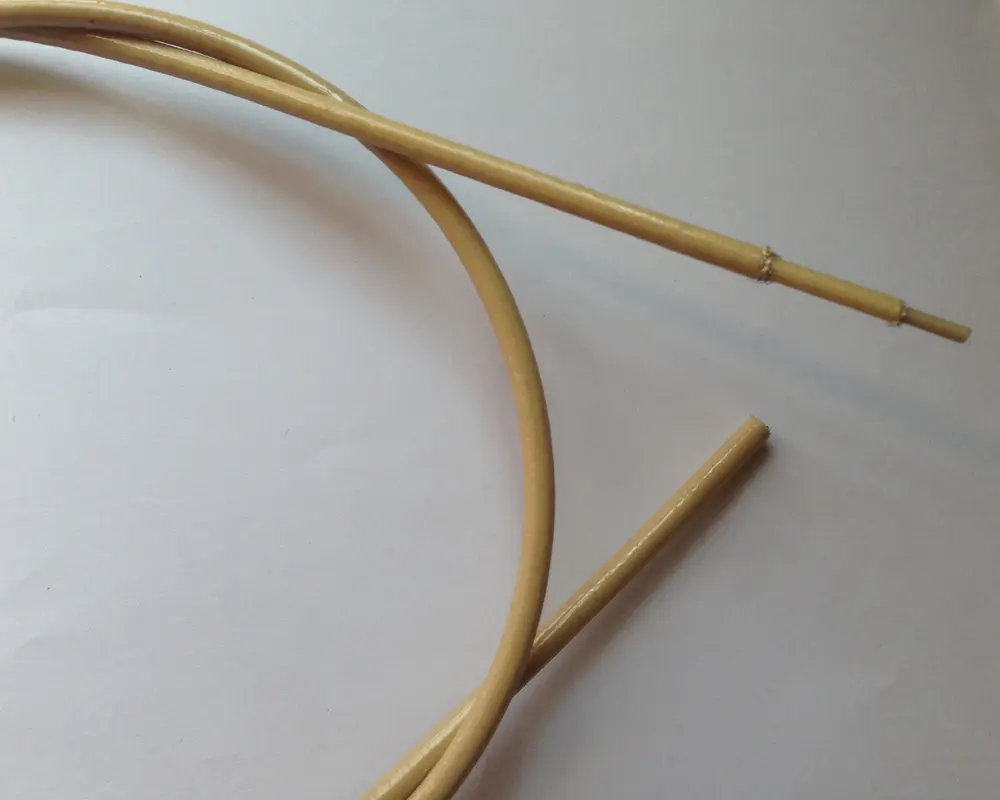
Ultra-high-temperature 300°C Magnet Wire utilizes advanced Polyimide (PI) film insulation to maintain continuous operational integrity up to 300°C. In contrast, standard magnet wire uses organic enamel coatings such as polyurethane or polyester-imide. These conventional enamel coatings limit thermal endurance to lower thermal classes between 130°C and 200°C.
Operating your electromagnetic systems above a wire thermal rating severely compromises long-term system reliability. Excessive operating temperatures induce rapid insulation embrittlement within coil windings. Consequently, this chemical breakdown triggers severe dielectric breakdown and destructive short circuits. You must specify appropriate insulation classes to shield high-stress coils against thermal degradation and costly equipment failure.
Key Takeaways
Advanced polyimide film insulation helps 300°C magnet wire withstand extreme heat without breaking down.
Standard enamel coatings degrade quickly above 120°C and cause dangerous electrical short circuits.
Polyimide insulation prevents power loss and keeps high-voltage motors running efficiently under extreme stress.
Choosing 300°C magnet wire reduces long-term repair costs and prevents catastrophic equipment failures.
Thermal Ratings and Insulation Chemistry
High-performance electromagnetic designs require precise insulation chemistry. You must select wire insulation that survives aggressive thermal conditions while preserving physical integrity. Standard magnet wire utilizes liquid enamel coatings. Manufacturers apply liquid polyurethanes or polyester-imides directly to the conductor. The liquid curing process creates thin polymer layers around the copper core. However, these basic organic enamels possess simple molecular chains. Thermal stress breaks these weak molecular bonds rapidly during operation. Advanced high-temperature magnet wire relies on specialized film technology instead. Engineers construct aromatic polyimide insulation through complex step-growth polymerization. Polyimide features repeating imide rings within strong aromatic carbon backbone structures. This rigid aromatic matrix grants exceptional thermal stability. It protects the physical film barrier against chemical attack, environmental moisture, and severe mechanical abrasion.
Polyimide Film vs. Standard Enamels
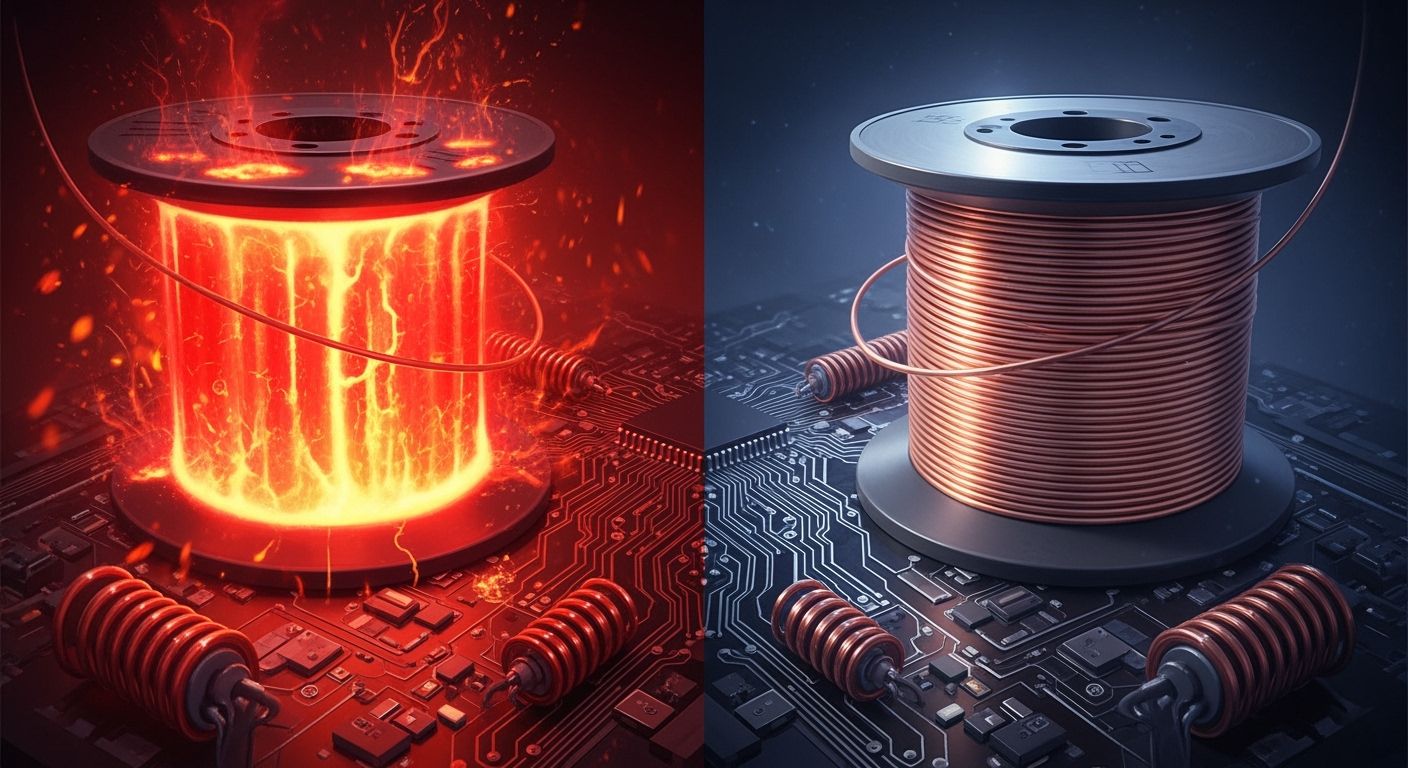
Standard enamel coatings suit everyday electric motors and low-stress transformers. However, standard enamels fail when thermal demands exceed normal operating parameters. Standard polyurethane insulation degrades rapidly under elevated thermal conditions. You can evaluate the core thermal capabilities of these competing insulation materials across key operational parameters:
Insulation Material
Continuous Thermal Operating Limit
Degradation and Aging Characteristics
Polyurethane
105°C – 120°C
Experiences cracking and rapid aging when exposed to conditions above 80°C for extended periods; breaks down quickly under elevated temperatures.
Polyimide
200°C – 260°C
Preserves structural integrity without noticeable aging; exhibits superior resistance to thermal shocks and possesses the slowest rate of performance decay over long-term usage.
Polyurethane enamels lose mechanical elasticity under heat. Elevated operating temperatures cause liquid-applied enamels to cross-link prematurely and shrink. This process creates fine surface micro-cracks across coil turns. In contrast, 300°C Magnet Wire uses seamless polyimide film wrapping. The aromatic ring structures resist chain scission during heavy electrical loads. You eliminate physical film flaking and insulation thin spots by choosing polyimide film over standard enamels.
Continuous Thermal Limits and Degradation
Operating equipment near maximum thermal thresholds accelerates insulation degradation rates. Traditional polyurethane enamels reach their structural limit quickly. Polyurethane breaks down rapidly above its safe continuous threshold. Extended exposure to temperatures above 80°C induces severe material aging. The polymer chain ruptures, causing brittle insulation coats. Volatile organic compounds escape from the heated enamel, creating microscopic voids within the coil pack. These internal voids weaken dielectric properties. Microscopic voids also trigger localized arc discharges between adjacent wire turns.
Polyimide delivers top-tier thermal capacity among magnet wire insulations, maintaining its operational capabilities up to 250°C. Advanced 300°C Magnet Wire technology extends this thermal threshold even further. Polyimide effectively withstands thermal breakdown along with chemical exposure and mechanical forces. The dense aromatic chemical network prevents polymer oxidation. It preserves physical insulation thickness despite constant elevated thermal stress. You prevent premature coil short-circuits by deploying polyimide film insulation. The material maintains structural flexibility during extreme temperature cycling. You avoid sudden electrical equipment failure, reduce maintenance frequency, and extend system operating lifespan in demanding industrial environments.
300°C Magnet Wire Electrical Performance
High-performance electrical systems demand robust thermal endurance and unyielding electrical insulation strength under extreme ambient temperatures. Ultra-high-temperature magnet wire preserves structural insulation integrity and maintains top-tier electrical characteristics during prolonged thermal stress. You protect critical coils against catastrophic dielectric failure by selecting advanced polyimide film insulation.
Dielectric Strength and Breakdown Voltage
A polyimide film layer provides exceptional dielectric strength ranging between 100 and 300 kV/mm under high heat conditions. Standard enamel insulations thin out, soften, and degrade under severe thermal loads. Polyimide insulation maintains a rigid molecular structure. This dense structural polymer prevents localized voltage arcs between adjacent wire turns during continuous high-stress operation.
You can evaluate the electrical performance comparison between polyimide film and traditional enamel options across multiple thermal classes:
Wire Thermal Class
Dielectric Loss Tangent (tanδ) at 200°C
Room Temp Partial Discharge Inception Voltage (PDIV)
High-Temperature Partial Discharge Inception Voltage (PDIV)
Class B (Standard Enamel)
0.080
800 V
400 V
Class F (Standard Enamel)
0.040
900 V
550 V
Class H (Standard Enamel)
0.020
1000 V
750 V
Class N (Standard Enamel)
0.015
1100 V
900 V
Class R (Standard Enamel)
0.012
1200 V
1050 V
Class C (Polyimide PI)
0.008
1300 V
1200 V
Class C polyimide insulation demonstrates superior electrical baseline stability. Standard Class B enamel experiences a sharp performance drop under elevated temperatures. Its partial discharge inception voltage drops from 800 V down to 400 V. Class C polyimide insulation suffers only a minimal drop from 1300 V to 1200 V. High partial discharge thresholds achieve dielectric breakdown prevention in high-voltage electromagnetic windings.
Volume Resistivity and Energy Efficiency
Polyimide film retains high volume resistivity during severe continuous thermal exposure. High volume resistivity blocks leakage currents from escaping through the insulation layer. Unwanted leakage currents create excessive internal heat buildup inside tight motor stators. Controlling internal current leakage lowers overall resistive energy losses in high-density coils.
power loss density = leakage current density x electric field gradient
A low dielectric loss tangent directly improves operational system efficiency. Class C polyimide limits power losses to tanδ = 0.008 at 200°C. Standard Class B enamel allows dielectric loss to surge up to 0.080 at the same temperature. Class C polyimide keeps dielectric power loss continuously below 0.01 under elevated thermal stress.
300°C Magnet Wire maintains high energy efficiency across long operational cycles. Lower insulation loss limits internal heating within tightly packed electromagnetic assemblies. You avoid thermal runaway conditions by preventing localized dielectric degradation. Specifying premium 300°C Magnet Wire ensures stable voltage breakdown thresholds, minimizes active power loss, and extends total equipment operating lifespan in harsh operating environments.
High-Stress Industrial and Aerospace Applications
Applying 300°C Magnet Wire in Extreme Conditions
Severe operating environments demand specialized wire solutions. High-stress aerospace propulsion systems, downhole oil exploration motors, and industrial robotics joint motors continuously subject high-stress electromagnetic coils to intense environmental heat. Standard enamel wires degrade quickly under these continuous thermal stresses. Advanced extreme temperature wire insulation allows your critical equipment to operate reliably without experiencing structural film decay or short circuits.
You can deploy 300°C Magnet Wire inside severe industrial applications to eliminate premature dielectric failure. CITCable provides high-performance 300°C Magnet Wire solutions engineered specifically for mission-critical aerospace electrical systems, military actuators, and downhole drilling equipment. Their specialized polyimide insulation withstands harsh chemical exposure, physical vibration, and extreme thermal surges during demanding continuous duty cycles.
Conventional Uses for Standard Magnet Wire
Standard enamel magnet wire effectively powers everyday consumer goods and commercial machinery. Polyurethane wire rated for Class 130°C (B) offers direct solderability for low-power signal coils, hand-wound prototypes, power tools, and household appliance motors in blenders and fans. Polyester-imide wire achieves Class 180°C (H) thermal endurance, supporting industrial motor windings, premium audio drivers, and EV auxiliary converters.
Higher thermal classes accommodate demanding commercial motor designs. You can evaluate standard enamel magnet wire options across these established thermal categories:
Wire Class
Continuous Temperature Limit
Typical Application Examples
Class H (Class 180)
180°C
Servo motors, VFD units, EV traction systems, cooling compressors, and high-speed rail motors
Class 200
200°C
High-temperature industrial equipment motors, aerospace electrical systems, downhole oil/gas exploration motors, and industrial robotics joint motors
You can also specify Class 180 magnet wire for switch-mode power supply transformers operating above 100W, high-efficiency BLDC motors in e-bikes and drones, Class D amplifier transformers, and industrial servo drive chokes operating in high ambient temperatures above 70°C. Standard enamel coatings satisfy moderate thermal requirements across conventional electrical designs.
Selection Criteria and Total Cost of Ownership
Selecting wire insulation requires balancing upfront purchase prices against severe operational risks. You protect critical hardware by evaluating mechanical stress, electrical demands, and thermal limits during initial system design.
Reliability and Failure Risk Mitigation
You must evaluate key engineering risk criteria when selecting insulation for high-stress systems. Severe mechanical vibration, continuous thermal cycling, and high rotational forces cause insulation flaking and dielectric breakdown.
Engineering Risk Criterion
Stress Factor
Evaluation & Risk Mitigation Strategy
Flexibility & Adhesion
Thermal cycling and mechanical bending stress
Wrap wire 5x around a matching-diameter mandrel to verify zero flaking and intact turn-to-turn isolation
Thermal Class Rating
Premature insulation breakdown under heavy electrical loads
Verify continuous temperature resistance within the required 105°C to 240°C+ range
Insulation Pinholes & Defect Density
Micro-punctures from copper dust or die burrs leading to electrical shorts
Assess mechanical film adhesion under rotational stress, set maximum fault limits, and require in-line fault logs
System builders prevent catastrophic coil failure in mission-critical motor applications by enforcing strict testing protocols. In-line detection logs catch microscopic pinholes before motor installation. High quality film layers preserve isolation and resist damaging copper burrs.
Cost-Benefit Analysis and Material Choice
Standard enamel wire features lower purchase expenses. However, operating conventional coatings near maximum thermal boundaries triggers frequent downtime and hardware destruction. Specifying 300°C Magnet Wire increases initial material costs, but high thermal headroom prevents premature insulation failure. You reduce total ownership expenses over the complete operating timeline.
Superior thermal tolerance simplifies active cooling requirements inside compact motor housings. Systems running 300°C Magnet Wire tolerate elevated ambient temperatures without needing heavy liquid cooling loops or external heat exchangers. Eliminating auxiliary cooling hardware reduces system weight, lowers manufacturing complexity, and maximizes energy efficiency. Furthermore, stable polyimide insulation extends long-term operational lifespan, delivering reliable performance through aggressive continuous duty cycles.
Standard magnet wires use organic enamels like polyurethane. These conventional enamels degrade quickly under extreme thermal loads. Advanced polyimide film utilizes strong aromatic ring structures. This robust chemical framework allows high-temperature wire to preserve mechanical flexibility and retain high dielectric strength between 100 and 300 kV/mm under continuous thermal stress.
Specifying advanced 300°C Magnet Wire safeguards your mission-critical electromagnetic coils in severe operational environments. This high-performance insulation prevents premature short circuits, film embrittlement, and destructive dielectric breakdown. You must weigh higher upfront material costs against catastrophic downtime risks. Choosing premium thermal endurance ensures long-term system reliability and lowers overall equipment operating expenses.
FAQ
What is the primary operational difference between 300°C magnet wire and standard wire?
You achieve continuous high-heat operation by selecting polyimide insulated magnet wire. Standard magnet wire relies on organic enamel coatings like polyurethane or polyester-imide. These standard enamel coatings limit your continuous thermal endurance to classes between 130°C and 200°C.
Why does standard enamel fail in extreme thermal environments?
Operating standard wire above its thermal class magnet wire rating causes rapid insulation embrittlement. Thermal stress ruptures organic chemical bonds within standard coatings. This material breakdown creates microscopic voids, triggering dielectric breakdown in motor windings and causing destructive short circuits.
How does polyimide film preserve energy efficiency under severe heat?
You preserve electrical system efficiency because polyimide film maintains high dielectric strength between 100 and 300 kV/mm under extreme heat. Its rigid molecular structure blocks current leakage density, minimizing active dielectric power loss during heavy continuous electrical loads.
Is specifying 300°C magnet wire worth the higher upfront cost?
Yes. You prevent catastrophic equipment failure in mission-critical applications by specifying premium high temperature coil insulation. Superior thermal headroom eliminates auxiliary cooling hardware, minimizes operational downtime risks, and extends total equipment lifespan in severe industrial environments.
Read More


 IPv6 network supported