May 13, 2026
You face tough choices when selecting cables for harsh environments. PEEK, Fluoroelastomer, and Anti-Capillary cables stand out as top solutions because they handle chemical exposure, moisture, extreme temperatures, and mechanical stress with ease. These specialty cables offer durable protection against acids, water ingress, and physical strain, ensuring reliable performance. When choosing a cable, consider the specific stressors in your environment to match the right cable to your needs.
Key Takeaways
PEEK cables excel in extreme temperatures and chemical resistance, making them ideal for high-demand industries like oil & gas and aerospace.
Fluoroelastomer cables offer superior flexibility and protection against chemicals and moisture, perfect for environments like semiconductor manufacturing.
Anti-capillary cables prevent moisture from damaging sensitive electronics, ensuring reliability in wet conditions such as marine and industrial settings.
When selecting cables, assess the specific environmental challenges like temperature, chemicals, and moisture to choose the best option for your needs.
Consult with cable experts to confirm material compatibility and installation best practices for long-term reliability in harsh environments.
Why Specialty Cables Matter
Defining Harsh Environments
You encounter harsh environments when cables must operate under extreme conditions. These settings include industrial plants, outdoor installations, underground networks, and hazardous locations. Specialty cables for harsh environments are engineered to withstand challenges such as temperature extremes, chemical exposure, moisture, and mechanical stress. Industry standards classify environments based on fiber type and application:
Fiber Type
Description
Application
OS1
Designed mainly for indoor single-mode installations
Building backbone communication systems
OS2
Optimized for long-distance outdoor communication
Industrial campuses and infrastructure networks
OM1 / OM2
Early multi-mode designs
Short communication distances in industrial buildings
OM3 / OM4
High-bandwidth multi-mode solutions
Automation networks and data communication systems
You must also consider regulatory requirements. For example, RoHS compliance restricts hazardous substances in cable insulation and jackets, ensuring environmental safety. Many jurisdictions require documentation and proper installation to meet safety standards.
Cable Performance Challenges
Specialty cables face several performance challenges in harsh environments. High temperatures accelerate insulation aging, making it brittle and prone to cracking. Thermal cycling causes expansion and contraction, which leads to mechanical stress and potential damage. Chemical exposure from acids, alkalis, and solvents can degrade insulation materials. Mechanical stress from vibration, bending, and pulling can impair cable performance.
Tip: Choose specialty cables with durable jackets and advanced polymer compositions to improve reliability in extreme conditions.
You need cables that offer:
Resistance to extreme temperatures, moisture, and chemicals
Protection against vibration, physical stress, and UV radiation
High tensile strength for installation and operation
Flexible construction for easy routing through tight spaces
Design Feature
Description
Durable outer jackets
Protect against abrasion, chemicals, moisture, and UV exposure
Armored fiber optic cables
Provide protection from crushing, rodent damage, and mechanical impact
High tensile strength
Withstand pulling forces during installation and operation
Flexible cable construction
Allows easy routing through equipment, conduits, and tight spaces without damaging the fiber
Recent advancements in specialty cable materials include cross-linked polymers and specialized protective sheathing. These innovations help cables endure high temperatures, moisture, and physical stress, making them ideal for demanding sectors such as energy, transportation, and defense.
PEEK Cable Overview
Construction and Materials
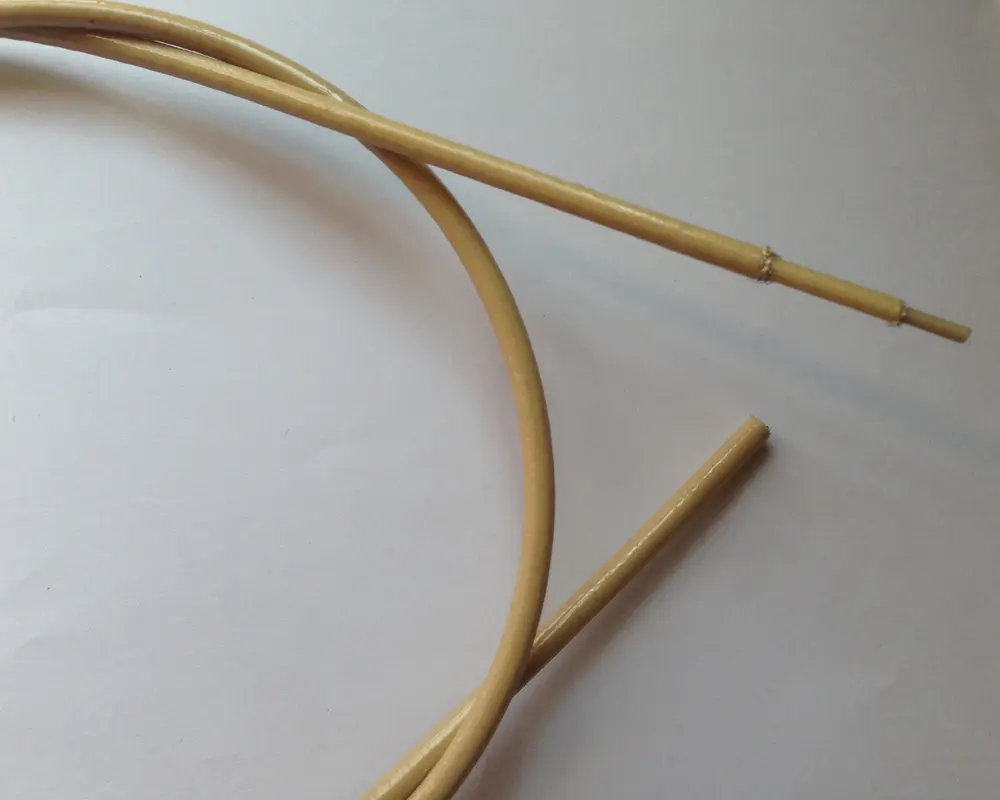
You need cables that deliver consistent performance in extreme conditions. CITCable’s PEEK cables use advanced construction methods and materials to ensure durability and reliability. The conductor typically consists of tinned copper or bare copper, which improves conductivity and resists corrosion. The insulation layer uses PEEK, a high-performance polymer that provides excellent electrical and mechanical protection. Some designs include an additional sheath layer for enhanced protection.
Feature
Description
Conductor
Tinned copper or bare copper for improved conductivity and corrosion resistance.
Insulation Layer
PEEK provides excellent electrical and mechanical protection.
Sheath Layer (optional)
Additional sheath for enhanced protection performance.
High Temperature Resistance
Operates continuously at temperatures up to 260°C.
Flame Retardancy
Meets UL 94 V-0 rating, preventing fire spread.
Chemical Resistance
Suitable for harsh environments due to excellent chemical corrosion resistance.
Mechanical Strength
High strength and abrasion resistance ensure durability under complex conditions.
Electrical Insulation
Good electrical insulation performance for stable signal transmission.
Biocompatibility
Harmless to the human body, suitable for medical devices and implants.
Lightweight
Reduces overall cable weight, enhancing usability.
Note: CITCable’s PEEK cables meet strict industry standards for flame retardancy and biocompatibility. You can rely on these cables for both industrial and medical applications.
Key Features
You benefit from several key features when you choose PEEK cables for harsh environments. PEEK insulation delivers outstanding temperature resistance, allowing continuous operation at temperatures up to 240°C. The material resists most chemicals, except concentrated sulfuric acid, making it ideal for corrosive settings. Reinforced grades of PEEK provide high mechanical strength and abrasion resistance.
Property
PEEK Cables
Other Cable Types
Temperature Resistance
Long-term use up to 240°C
Varies, generally lower
Chemical Resistance
Excellent, except concentrated sulfuric acid
Varies, often less resistant
Mechanical Strength
High, reinforced grades offer higher strength
Generally lower than PEEK
You also gain reliable electrical insulation, which ensures stable signal transmission. The lightweight design reduces installation effort and improves usability. CITCable’s PEEK cables offer flame retardancy, meeting UL 94 V-0 standards, which prevents fire spread in critical environments.
Advantages in Harsh Environments
PEEK cables from CITCable excel in harsh environments where you face extreme temperatures, aggressive chemicals, and mechanical stress. You can use these specialty cables in settings that demand high performance and long-term reliability. PEEK insulation resists corrosion, radiation exposure, and environmental stress cracking. You avoid frequent replacements and downtime because these cables maintain integrity under challenging conditions.
Tip: If you need cables for high-temperature, corrosive, or high-pressure environments, consider CITCable’s PEEK cable solutions for harsh environments.
You also benefit from biocompatibility, which makes PEEK cables suitable for medical devices and implants. The flame-retardant properties protect your equipment and personnel in hazardous locations. You can trust these cables to deliver consistent performance in oil & gas, aerospace, and industrial sectors.
Common Applications
You find PEEK cables in a wide range of industries that require robust performance. CITCable’s PEEK cables address environmental challenges such as corrosion, radiation, and mechanical wear. Typical applications include:
Aerospace: Brackets, cable ties, and wiring harnesses use PEEK cables for low weight and chemical resistance.
Medical: Spinal cages, surgical handles, and implantable devices rely on biocompatibility and sterilization stability.
Electronics: Connectors and PCB supports benefit from dielectric strength and thermal stability.
Automotive: Fuel rails, gears, and seals use PEEK cables for heat and chemical resistance.
Oil & Gas: Bearings and seals require HPHT performance and chemical resistance.
Industrial: Pump housings and gears depend on wear resistance and dimensional stability.
If you need more information about specialty cables for harsh environments, explore CITCable’s high-temperature cable solutions or corrosion-resistant cable products for demanding applications.
Callout: You can improve system reliability and safety by selecting CITCable’s PEEK cables for harsh environments. These specialty cables offer unmatched durability and performance.
Fluoroelastomer Cable Overview
Material Properties
You need cables that withstand the toughest conditions. Fluoroelastomers deliver exceptional resistance to temperature, chemicals, and wear. Manufacturers often enhance these materials with graphene nanotubes, which further improve durability and performance. You benefit from a cable that maintains flexibility and integrity even when exposed to aggressive chemicals or high heat. This makes fluoroelastomer cables ideal for high-performance applications in electronics, industrial automation, and environments where reliability matters most.
Tip: Choose fluoroelastomer cables when you require consistent performance in corrosive or high-temperature settings.
Key Features
You gain several advantages when you select fluoroelastomer cables for harsh environments. The following table highlights the features that set these cables apart:
Feature
Description
High performance
Industry-leading resistance to chemicals, heat, and plasma.
Designed for harsh environments
Ideal for demanding applications such as semiconductor etching equipment, where plasma resistance and long service life are critical.
Extended maintenance intervals
Exceptional durability helps reduce seal degradation, contributing to improved uptime and operational safety.
You can rely on these specialty cables to deliver stable operation and minimize downtime. The robust design ensures that your equipment stays protected, even in the most demanding conditions.
Environmental Advantages
Fluoroelastomer cables offer unique environmental benefits. You experience superior resistance to acids, solvents, and extreme temperatures. The material prevents degradation from UV exposure and ozone, which extends the cable’s service life. You avoid frequent replacements and reduce maintenance costs. These cables also resist plasma, making them suitable for environments where electrical discharge or high-energy processes occur.
Callout: You improve operational safety and reliability by choosing fluoroelastomer cables for harsh environments.
You can find more information about corrosion-resistant cable solutions for harsh environments by exploring our guide on high-performance specialty cables.
Typical Uses
You see fluoroelastomer cables used in a variety of demanding industries. These cables support critical operations in:
Semiconductor manufacturing: Plasma-resistant cables ensure stable performance in etching and deposition equipment.
Chemical processing plants: Acid-resistant cables protect instrumentation and control systems.
Aerospace and defense: High-temperature cables maintain integrity during flight and mission-critical operations.
Oil and gas exploration: Specialty cables for harsh environments withstand exposure to aggressive chemicals and extreme heat.
Industrial automation: Flexible cables for tight spaces deliver reliable signal transmission and mechanical durability.
You can learn more about flexible cables for industrial automation and acid-resistant cables for chemical processing by visiting our specialty cable solutions page.
Note: You enhance system reliability and reduce maintenance intervals by selecting fluoroelastomer cables for harsh environments.
Anti-Capillary Cable Overview
Design Principles
You need cables that block moisture from reaching sensitive electronics. Anti-capillary cable designs address this challenge by disrupting the capillary path inside multi-strand conductors. In standard cables, tiny voids between copper strands act as capillary tubes. When exposed to water or high humidity, negative pressure pulls moisture along the conductor. This moisture can bypass seals and reach critical components, causing failures that are often mistaken for seal defects.
Anti-capillary cables use specialized wire designs and potting methods to prevent fluid migration. You benefit from symmetrical wire structures that facilitate uniform sealing and insulation. Asymmetrical constructions also block capillary action when filled with the right compounds. These design principles ensure that moisture cannot travel along the conductor, protecting your equipment in demanding environments.
Anti-capillary wire design prevents fluid migration along conductor strands.
Symmetrical structures enhance sealing and reliability.
Asymmetrical constructions with fillers and insulation effectively block capillary action.
Tip: Choose anti-capillary cables for environments where moisture ingress poses a risk to sensitive electronics.
Key Features
You gain several advantages when you select anti-capillary cables for harsh environments. These cables incorporate barrier-sealing compounds that prevent fluid migration through capillary action. The construction simplifies sealing solutions and reduces the need for external sealing methods. You protect electronic devices from damage caused by fluid exposure and improve reliability in fluid-prone environments.
Feature
Anti-Capillary Cables
Standard Moisture-Resistant Cables
Fluid Migration Prevention
Prevents fluid migration through capillary action
Allows some fluid ingress through gaps
Construction
Incorporates a barrier-sealing compound
Standard insulation without sealing compound
Reliability and Longevity
Enhanced reliability in fluid-prone environments
Less reliable in similar conditions
Protection of Electronic Devices
Safeguards against damage from fluids
Higher risk of damage from fluid exposure
Simplified Sealing Solutions
Reduces need for external sealing methods
Often requires additional sealing measures
Performance in Harsh Environments
Designed for extreme conditions (e.g., high temperatures)
Limited performance in harsh conditions
You can explore more about anti-capillary cable construction in our guide to moisture-blocking cables for industrial applications.
Moisture Resistance Benefits
You avoid costly downtime and equipment failures by using anti-capillary cables. These cables block moisture from migrating along the conductor, even in environments with high humidity or direct water exposure. You reduce the risk of corrosion, short circuits, and signal degradation. Anti-capillary designs also simplify installation, since you do not need extra sealing measures.
Callout: Anti-capillary cables deliver superior moisture resistance, making them ideal for underground installations, marine environments, and outdoor sensor networks.
You can learn more about moisture-resistant cable solutions for harsh environments by visiting our resource on waterproof specialty cables.
Application Examples
You find anti-capillary cables in industries where moisture ingress threatens system reliability. These cables support critical operations in:
Geotechnical instrumentation: Moisture-blocking cables protect sensors and data loggers in soil and groundwater monitoring.
Oil and gas exploration: Anti-capillary cables ensure reliable signal transmission in wet and corrosive environments.
Marine and offshore platforms: Specialty cables for harsh environments prevent water migration and safeguard communication systems.
Environmental monitoring: Waterproof cables for sensor networks maintain data integrity in outdoor and remote locations.
Industrial automation: Anti-capillary designs support robust performance in washdown areas and humid production facilities.
You can discover more about specialty cables for harsh environments by reviewing our selection of anti-capillary cables for geotechnical and marine applications.
Comparing Specialty Cables
Strengths and Limitations
When you compare specialty cables for harsh environments, you need to focus on how each type performs under different stressors. The table below highlights the comparative strengths of fluoroelastomer and anti-capillary cables in terms of temperature, chemical, and moisture resistance:
Material
Temperature Resistance
Chemical Resistance
Moisture Resistance
Fluoroelastomer
High
Excellent
Excellent
Anti-Capillary
Moderate
Good
Excellent
PEEK
N/A
N/A
N/A
You will find that:
Fluoroelastomer cables offer excellent moisture and chemical resistance. They remain flexible and withstand extreme temperatures, making them a top choice for environments like ships or nuclear facilities.
Anti-capillary cables use a special design to prevent fluid migration. This feature gives you superior moisture resistance, which is essential in areas with water or other fluids.
PEEK cables provide outstanding performance in high-temperature and chemically aggressive environments. They also deliver strong mechanical durability, but specific comparative data for moisture resistance is not available.
Tip: Always match the cable’s strengths to the most critical environmental challenge you face.
Selection Guidance
You should consider your application’s unique demands when choosing among specialty cables. If you need high flexibility and resistance to both chemicals and moisture, fluoroelastomer cables serve you well in industrial automation or chemical processing. For installations where water ingress poses the greatest risk, anti-capillary cables protect your sensitive electronics and ensure long-term reliability. When your environment exposes cables to extreme heat or aggressive chemicals, PEEK cables deliver the durability and stability you require.
Other specialty cables, such as armored cables for mechanical protection or hybrid cables for combined power and data transmission, also address specific harsh environment needs. Geotechnical instrumentation cables, for example, support underground monitoring where moisture and soil movement threaten signal integrity.
Note: Evaluate the temperature, chemical, and moisture risks in your environment before making a final selection. Specialty cables designed for harsh environments help you maintain system performance and reduce maintenance costs.
Long-tail keywords used: high-temperature cable solutions, corrosion-resistant cable products, flexible cables for industrial automation, waterproof cables for sensor networks.
You gain unique benefits from each specialty cable. PEEK cables deliver high-temperature and chemical resistance. Fluoroelastomer cables provide flexibility and superior protection against chemicals and moisture. Anti-capillary cables block fluid migration, ensuring reliable performance in wet conditions. To select the right cable for harsh environments, review temperature limits, chemical compatibility, moisture protection, and mechanical strength. Consult cable experts to confirm IP ratings, material compatibility, and installation best practices. These steps help you achieve long-term reliability with specialty cables for harsh environments.
FAQ
What makes PEEK cables ideal for high-temperature environments?
PEEK cables withstand continuous operation at temperatures up to 260°C. You benefit from their flame-retardant properties and chemical resistance. These features make PEEK cables a top choice for high-temperature cable solutions in demanding industries.
How do anti-capillary cables prevent moisture damage?
Anti-capillary cables use specialized wire designs and barrier-sealing compounds. You avoid fluid migration along the conductor, which protects sensitive electronics. This construction ensures reliable performance in waterproof cables for sensor networks.
Can fluoroelastomer cables handle chemical exposure?
Yes. Fluoroelastomer cables resist acids, solvents, and plasma. You gain extended service life and reduced maintenance intervals. These cables are excellent corrosion-resistant cable products for harsh environments.
Where should you use specialty cables for harsh environments?
You should install specialty cables in oil and gas exploration, marine platforms, industrial automation, and environmental monitoring. These cables deliver robust performance and protect your systems from extreme conditions.
How do you select the right specialty cable for your application?
You need to assess temperature, chemical, and moisture risks. Review material compatibility and installation requirements. Consult experts to match flexible cables for industrial automation or moisture-resistant cables to your specific needs.
Read More


 IPv6 network supported